Door Slab vs Door Assembly: What Is Included?
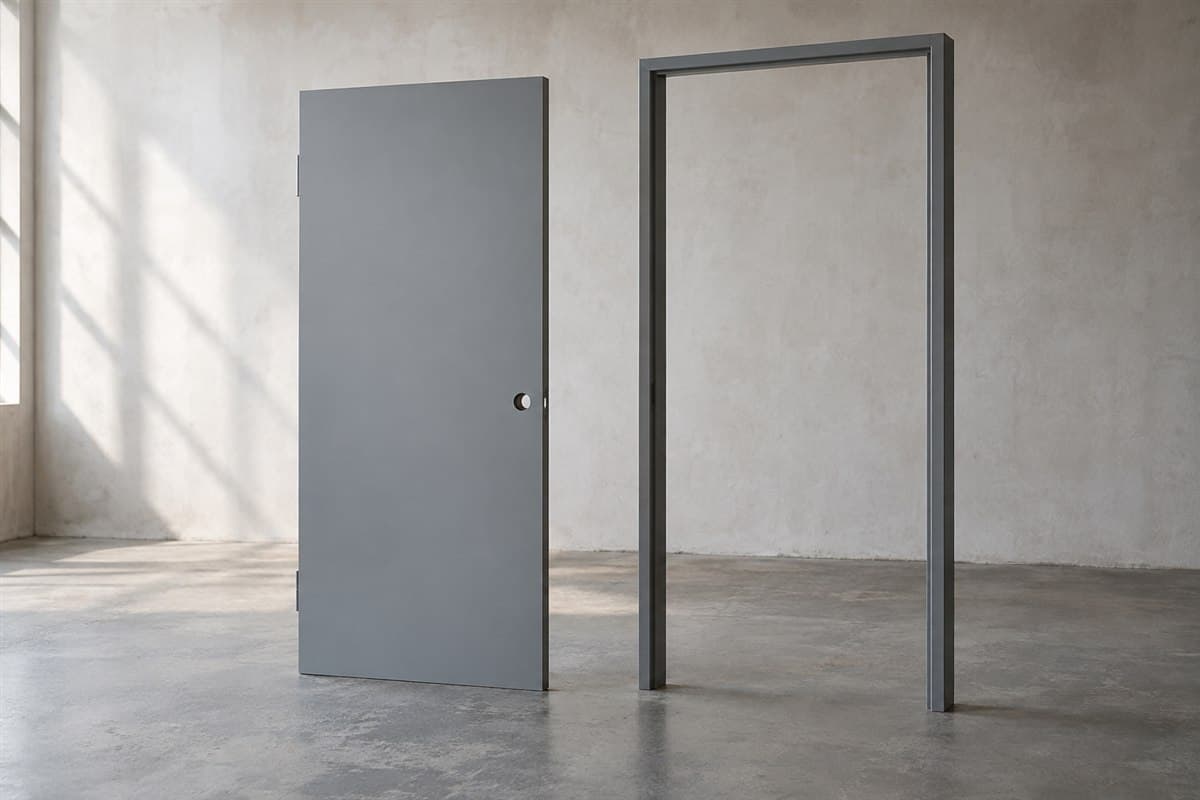
A door slab is the moving panel. A door assembly combines parts for an opening, but its name does not tell you everything in the package. Read the itemized contents before deciding what still needs to be supplied.
This comparison helps you evaluate a replacement listing. You will finish with a contents checklist, a list of parts being retained, and specific questions about anything missing.
Define the replacement job first
Stand at the existing doorway and write down what you want to change. Is the moving door damaged? Is the frame also damaged? Are you investigating the whole opening because the door no longer works properly?
Photograph the door, frame, hinges, lock area, and floor junction. Leave the parts attached. Keep observations separate from a diagnosis. For example, write door rubs at top rather than frame must be replaced.
A frame surrounds the opening and receives the door. Hardware means fittings such as hinges, locks, and closers. A closer is a device that brings the door toward its closed position.
If you plan to retain the frame, have a door installer assess its condition. A new slab must work with the frame and fitting arrangement you keep. A matching size label alone does not settle that fit.
Read the listing in a fixed order
- Save the exact candidate identity. Record the listing name, selected options, and product information. A general category picture is not the contents list for your selection.
- Locate the slab description. Record its actual dimensions, material description, finish, and intended use. Keep missing details as questions.
- Look for the frame line. Find whether a frame is included, supplied separately, or absent. Record the actual frame identity when given.
- Check each hardware item. Look for hinges, lock, latch receiver, and any closer. Mark each item separately rather than writing hardware included.
- Check the floor and perimeter items. Look for a threshold and seals. A threshold is the piece across the doorway floor. Do not assume it comes with the door.
- Check assembly condition. Ask whether the door is hung in its frame or whether components arrive separately. Confirm what the installer will assemble.
- Compare the package with your job. Mark each required part as supplied with the candidate, retained from the existing opening, supplied separately, or unresolved.
If the description says the package arrives assembled, ask which parts are joined together. Then check the accessory list separately. Keep the seller's answer beside the selected configuration so the installer can see what remains to assemble.
Fill out the listing-inclusions checklist
Use these status words: included, excluded, unclear, or retained existing. Put the relevant listing text or written answer beside each status.
| Item to check | Status | Evidence or question |
|---|---|---|
| Moving door slab | Fill in | Exact identity and selected dimensions |
| Frame | Fill in | Frame identity and wall fit information |
| Hinges | Fill in | Included items or existing fittings to retain |
| Lock and handle | Fill in | Actual included fittings, separately named |
| Strike | Fill in | Frame fitting receiving the latch or bolt |
| Closer | Fill in | Included device or separate requirement |
| Threshold | Fill in | Exact floor-junction component |
| Perimeter and bottom seals | Fill in | Each included seal identified |
| Frame attachment parts | Fill in | Included parts and applicable instructions |
| Wall jamb and head trim | Fill in | Separate wall-edge items, if needed |
| Finish state | Fill in | Final finish or further work identified |
| Assembly condition | Fill in | Hung together or supplied as separate parts |
This is a comparison checklist, not a statement that any package contains all these items. Unclear remains unresolved until you obtain an answer for the selected candidate.
For a hypothetical listing, the contents might name a slab and frame while saying nothing about the lock. Mark lock unclear. Do not turn the lock shown in the picture into an included item.
Compare retained parts with the replacement
If the existing frame stays, collect the slab and frame measurements separately. Record hinge and strike locations from the existing opening. A strike is the frame fitting that receives the latch or bolt.
Hardware positions need field checking for a replacement. Do not substitute a generic table for the measurements of your opening. Use How to Measure an Existing Metal Building Walk Door for the measurement packet.
Record the door's handing, its opening arrangement under a particular naming convention. Include the viewing side, hinge position, and movement direction. Use How to Check Walk Door Handing and Swing before selecting a hand option.
For a package with a new frame, ask the installer to compare its required opening with the actual wall condition. Do not add a guessed allowance to the old slab dimensions. If the opening is hidden, leave that measurement unresolved.
Keep special requirements outside the contents assumption
Photograph existing door and frame labels for the installer. Ask whether the opening has fire, exit, access, or other requirements that affect the replacement. A package description needs separate evidence for those uses.
Do not treat steel construction as proof of a fire or sound rating. Ask which complete door, frame, and hardware arrangement meets the actual requirement. Record the answer for that arrangement, rather than a broad product family.
The door's own installation instructions decide its attachment and fitting requirements. Your building's drawings or a building professional resolve changes to the opening and supports. A package list is not permission to modify them.
Finish the comparison before choosing
Keep a separate list of wall-edge trim. It can be distinct from the door frame and seals. Use Jamb Trim vs Head Trim: How to Tell Them Apart to identify those parts.
Compare candidates using the same checklist. Missing information should stay visible beside each option. Ask specific questions about the selected configuration instead of asking only whether it is complete.
Your final packet should name the replacement scope, the package contents, and every retained or separately supplied part. If a needed item remains unclear, resolve it before treating the candidate as ready to order.