How to Check Walk Door Handing and Swing
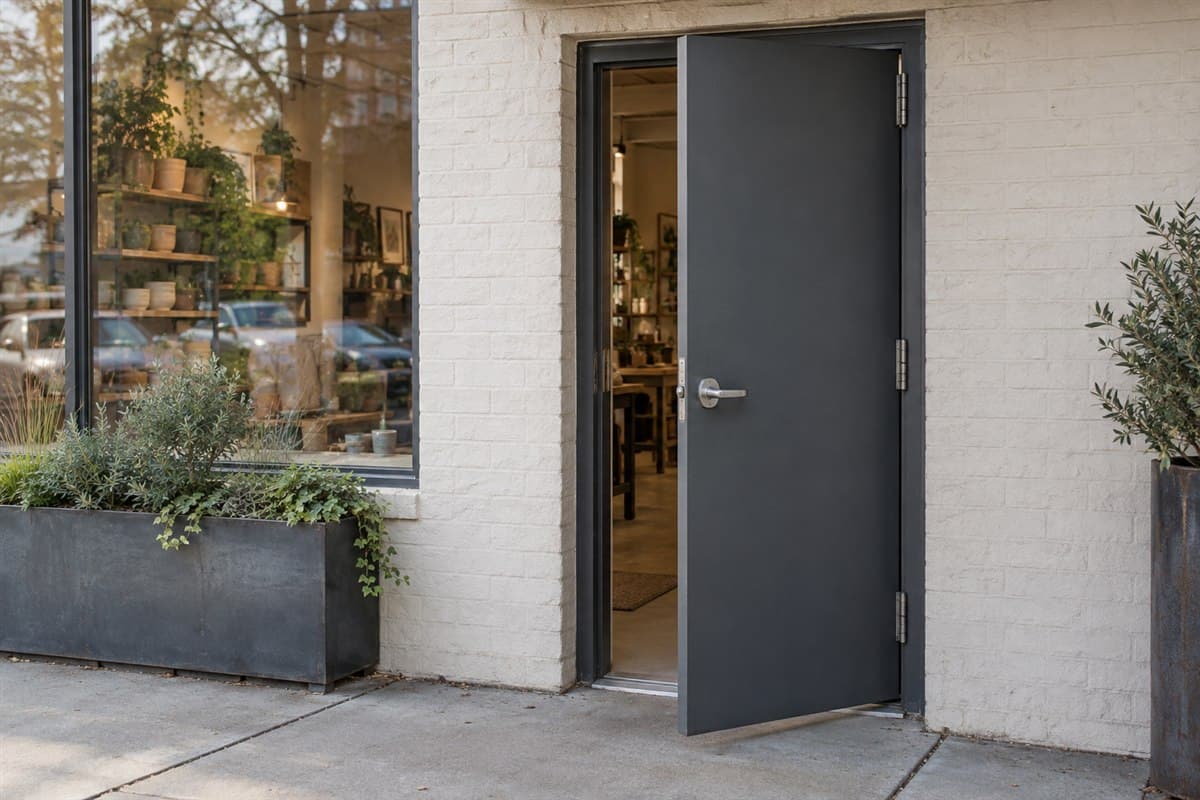
Write where you are standing before calling a door left or right. Then record the hinges and the direction it opens. Those plain observations are more useful than a hand label with no viewpoint.
Handing describes a door's opening arrangement using a naming convention. Swing describes its movement as it opens. Match your observations to the chart for the exact door before choosing its hand.
Identify the door and your viewing side
Bring a phone, pencil, and notebook. No door removal is needed. Start with a closed door you can operate normally and safely. Keep people and loose objects out of its movement path.
Name the door by location, such as rear shop entry. Name both sides with fixed descriptions, such as outside yard and inside shop. For a door between rooms, use the room names instead.
Take a full view from each side. Put the side names beside the photo numbers in your notebook. Do not add left or right until you have set the viewing side.
Look for the door's identity in old papers or labels. For a proposed replacement, find its actual product drawing and handing chart. Ask for the chart if the listing offers hand choices without explaining them.
If there are no surviving papers, the existing door still gives you useful observations. Keep its identity unknown while you record how it moves.
Observe the hinge and movement together
- Choose your first viewpoint. Stand facing the closed door from the named side. Write the side name and facing door at the top of the page.
- Locate the hinges. Note whether they appear on your left or right from that position. If they are concealed, write not visible and ask an installer to confirm the hinge side.
- Open the door normally. Observe whether the moving panel comes toward you or moves away. Keep your viewpoint fixed. Do not switch sides halfway through the observation.
- Photograph the partly open door. Include the frame and hinge side. A close-up of the handle alone does not show the opening arrangement.
- Repeat from the other side. Use the second side's name. Keep this second record separate so it does not overwrite the first viewpoint.
- Compare with the candidate's chart. Read which side the chart tells you to view from. Use the record for that side and match both hinge position and movement.
- Write the chart's label last. Copy its full hand or swing designation beside the plain description. Ask for confirmation if the drawing and selectable option disagree.
Do not decide a new swing direction merely because the present door is inconvenient. Have the installer review the proposed change and the building's exit needs before selecting a different arrangement.
Make a viewpoint and hinge-side card
This card keeps the physical observations attached to the selected hand label. Fill it out for the door being replaced and the proposed replacement separately.
Door location: A permanent room or building landmark.
Side A: A named place, such as outside yard; photo of the closed door.
From side A: Hinges left, hinges right, or not visible; door moves toward me or away from me.
Side B: The opposite named place; its closed-door photo.
From side B: A separate hinge and movement observation.
Open-door photo: Image showing the frame, hinge side, and moving panel together.
Candidate chart: Exact door identity and the chart's required viewing side.
Selected label: Full chart designation beside the matching plain description.
Unresolved point: Missing chart, concealed hinge, conflicting option, or proposed swing change.
Confirmation: The matching product drawing or written answer confirming the selected arrangement.
For a hypothetical record, side A might say hinges on my right; door moves toward the yard. That is an observation, not a hand designation. Add the designation only after comparing the exact candidate chart.
Keep hardware choices attached to the same door
Hardware means fittings such as hinges, locks, and closers. A closer is a device that brings the door toward its closed position. These items need their own compatibility checks.
Do not assume a hand label for a moving door also settles every hardware option. Compare the chosen door and hardware information together. Include photos of the existing fittings if any are being retained.
If the old door uses a push bar, special lock, or other exit equipment, include it in the packet. Ask the installer which parts must remain or be replaced. A hand chart alone does not establish exit suitability.
Use Door Slab vs Door Assembly: What Is Included? to check what comes with the replacement. A picture of a handle or closer does not establish package contents.
Look at the space used by the open door
Sketch the door's observed movement on paper, with the viewpoint and room names. Show nearby stairs, stored items, equipment, and other doors. Label obstructions you have actually seen.
Keep existing movement separate from desired movement. If you want the door to open differently, mark proposed change and have it reviewed. Do not simply reverse the hand option while leaving the rest of the plan unexplained.
The chosen door's installation instructions decide its attachment and hardware fitting requirements. Your building's drawings or a building professional decide changes affecting the opening and its support. Record those as separate tasks.
For dimensions, continue with How to Measure an Existing Metal Building Walk Door. Handing and measurements belong in the same purchase packet, but they answer different questions.
Remove the three common sources of confusion
First, do not call a door left-handed from memory while someone else views it from the opposite side. Send the named viewpoint and plain movement description.
Second, keep toward me and away from me tied to that viewpoint. Those phrases become unclear once you move through the doorway.
Third, keep the complete chart label. Do not shorten it by dropping a word you do not understand. Ask what that word means for the selected product.
Finish with two viewpoint records, an open-door photo, and one matching candidate chart. That packet lets another person confirm the arrangement before the door choice is final.