How to Inspect Delivered Metal Panels and Trim
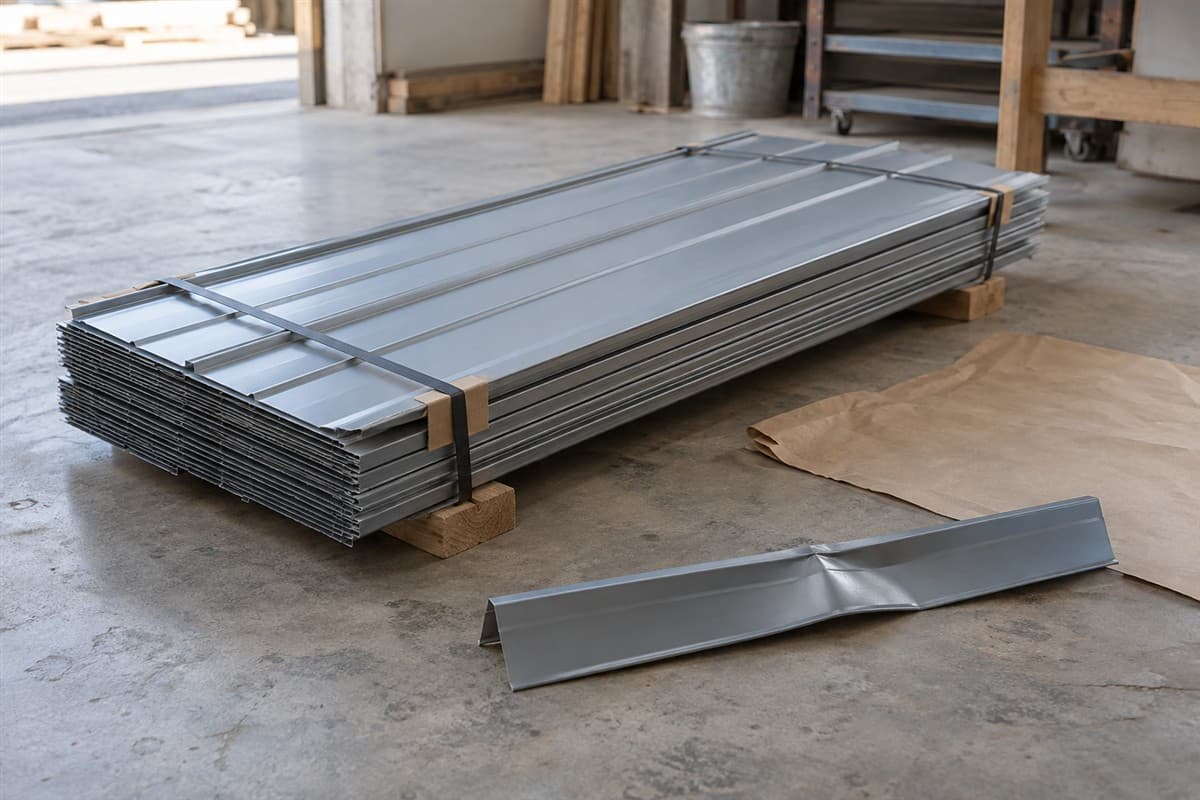
Check a metal-parts shipment against both the order and the packing list. Photograph the packaging first, then count and inspect the safely accessible parts. Keep damaged, missing, and not yet checked as separate results.
This is an arrival inspection, before installation changes the pieces. It helps you report a specific difference and keep questionable material out of the job. Follow the actual seller's and carrier's receiving instructions for reporting and receipt paperwork.
Prepare the list before the truck arrives
Gather the order confirmation, parts list, packing list when available, phone camera, pencil, and tape measure. A packing list describes the items included in the shipment. Your order confirmation describes what you arranged to receive.
Set up one line for each distinct item. Keep different panel lengths separate. Record trim names and shapes separately too. Trim is bent sheet metal used to finish edges and junctions.
Use How to Check a Metal Building Parts List if your order lines still lack clear descriptions. This arrival check compares the physical items with that list. It does not redo the original ordering arithmetic.
Arrange safe handling before inspection. Follow the delivered products' handling instructions and have suitable help and equipment for large bundles. Do not climb onto a stack or release its straps merely to count hidden pieces.
Find the contact and reporting instructions in your actual order records. Ask what to record on the receipt and how to report concealed damage. For a Steelium order, describe shortages or damage through the contact form or email support@steeliumcomponents.com within 2 business days of delivery. We will reply by email so you can send the photos. Other suppliers set their own deadlines, so check your order records.
Photograph the package before changing it
Take an overview of the shipment and close views of accessible labels. Then photograph torn wrapping, crushed corners, loose packaging, or other visible differences. Include an intact nearby area for context.
A bundle tag is the label identifying a group of pieces. Keep its identity connected to the contents as trained handlers unpack them. Write the tag number beside the corresponding inspection lines.
Do not assume a damaged wrapper means every panel inside is damaged. Do not assume intact packaging proves every sheet is sound. Record the package condition and the part condition separately.
If the inner sheets cannot be seen safely, write not inspected. Do not change that result to checked because the bundle label states a count. A labeled quantity and a verified physical count are different records.
Reconcile the parts in a fixed order
Reconcile means compare lists and explain their differences. Work through one item family at a time so quantities do not get mixed.
- Match the shipment identity. Compare order references and bundle tags with the packing list. Flag anything you cannot connect to an order line.
- Compare item descriptions. Check panel profile, finish label, and length labels. A profile is the sheet's end shape.
- Count accessible pieces. Record actual counts after safe unpacking. Keep pieces that remain hidden marked uncounted.
- Check dimensions where practical. On a safely supported loose piece, measure cut length end to end and add units. Cut length means the finished length of one sheet.
- Inspect visible faces and edges. Look for dents, scratches, bent ribs, crushed ends, and other changes. Photograph the specific piece involved.
- Inspect trim shapes. Compare each loose piece's end shape with its order description. Do not straighten it before photographing damage.
- Check small-part packaging. Keep screw labels and closure labels with their counts. A closure is a shaped strip filling panel-edge gaps.
- Write the difference. State ordered, listed as shipped, received and counted, and not yet checked. Do not collapse them into one total.
If measurement is unclear, record the uncertainty and photo. For panel length and coverage terms, use How to measure and order metal panels by length. Coverage means the width covered after neighboring sheets overlap; it differs from loose-sheet width.
Use the arrival comparison and evidence checklist
Make a copy of this table for the shipment. Give each affected piece a simple ID linked to its bundle tag.
| Item line | Ordered | Packing list | Physically checked | Condition and evidence |
|---|---|---|---|---|
| Each panel length | Description and quantity | Shipped label and count | Actual count or not counted | Whole sheet, end, and damage photos |
| Each trim shape | Name, length, and quantity | Piece label and count | Shape and count | End view and any bent area |
| Each screw type | Full type and quantity | Package identity | Package count and label | Clear label photo |
| Each closure type | Profile, orientation, and quantity | Package identity | Label and count | Strip shape and damage view |
| Other listed item | Exact order wording | Matching line or absent | Checked or unresolved | Context and close view |
For each problem, capture the package overview, bundle tag, whole affected part, and close damage view. Add a ruler photo when a measurement helps explain it. Keep the unedited originals with your notes.
Write shortages only after the count is confirmed. If a bundle is still wrapped, report quantity not checked. If an item is absent from the packing list, record that separately from being absent from the physical shipment.
Hold questionable pieces and report the difference
Do not install parts with unresolved damage or identity. Keep them identifiable and follow their storage instructions while the seller reviews the issue. Wet material needs prompt attention under the product's handling instructions.
Report facts: item line, bundle tag, measured difference, affected count, and photo names. Avoid deciding who caused damage when your evidence only shows its arrival condition. Retain packaging and damaged material until you receive directions about them.
Use 26-gauge PBR panel, 26-gauge R-panel, or Foam closure strips for PBR and R-panel to compare the catalog identity when those are the items involved. The closure entry awaits confirmation. No catalog name replaces the specifications in the actual order.
Your building's drawings or the panel maker's instructions decide overlaps, support requirements, and fastening patterns. Do not cut, bend, or change connections to make a wrong item fit. Finish with each line marked checked, damaged, missing, or not yet inspected, plus the next action for every unresolved line.