How to Store Metal Roofing Panels Before Installation
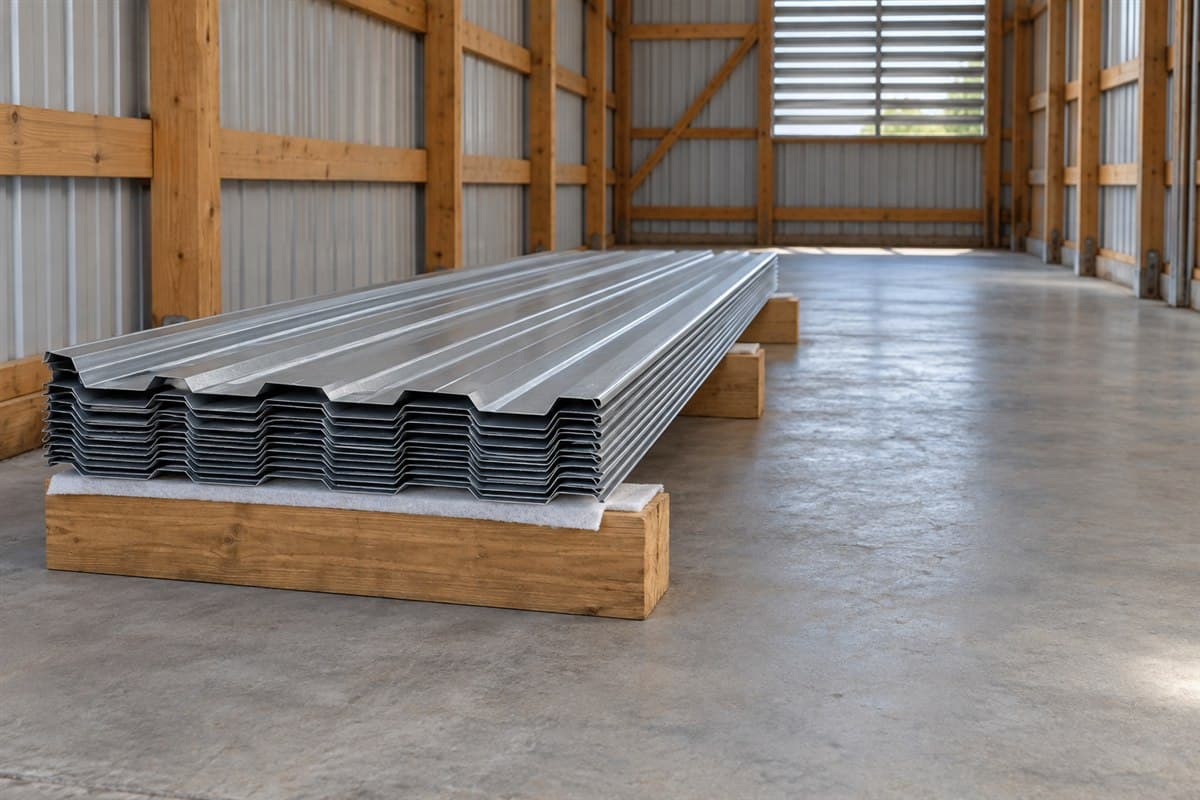
Choose a dry, sheltered storage area before the panels arrive. Keep the bundle off the ground and follow its handling instructions. Check for water between sheets rather than judging the bundle by its dry top surface.
Closely stacked metal sheets can suffer wet-storage damage when moisture stays between them. A cover alone cannot tell you that the sheets beneath it are dry. This job is about keeping water out while allowing the storage arrangement to dry properly.
Start with the handling sheet
Find the instructions for the exact panel. Look on the panel maker's website under downloads, installation, or technical information. Ask for the handling sheet if the product page does not include it.
Gather a tape measure, notebook, phone, gloves, and a flashlight. You can use these to prepare the storage location without opening or moving a bundle. The unloading crew needs its own equipment and handling plan.
Read four sections before setting up: unloading, manual handling, storage, and protective film. Protective film is a temporary peel-off surface covering, when supplied. It is different from the permanent paint or metal coating.
Copy the maker's directions for support layout, drainage, covering, and film removal into your job notes. Use its instructions for any support spacing or lifting requirement. Do not choose an unloading method from the length of the top sheet alone.
Prepare a place that stays usable
- Measure the available floor area. Compare its length and width with the bundle information. Leave room for the crew's handling method and a clear walking route. Mark obstructions on a simple sketch.
- Look for water sources. Check the floor after rain if possible. Avoid roof drips, doorway runoff, puddles, and places where nearby washing sends water toward the bundle.
- Choose a sheltered position. Use a dry, ventilated space when available. Ventilated means air can move through it. A shut, damp enclosure is not the same as dry shelter.
- Prepare the supports described by the maker. Their job is to keep the sheets supported and separated from the ground. Keep support surfaces clean. Use padding where the handling instructions require it.
- Arrange the cover as instructed. If outdoor storage is unavoidable, follow the maker's cover and drainage arrangement. Do not wrap a wet bundle tightly and call it protected.
- Keep other work away. Set cutting, grinding, and vehicle routes elsewhere. Leave the panel area available for inspection instead of stacking tools on top.
Do not use the roof as a convenient storage shelf. A bundle's weight and placement require planning. Keep this storage job at ground level unless a professional has planned roof loading and access.
Complete the storage-site checklist
Use this before unloading. Put yes, no, or unresolved beside each item. An unresolved handling item goes to the crew before the vehicle arrives.
| Check | Evidence to keep |
|---|---|
| Exact handling instructions obtained | File or printed sheet matching the panel name |
| Space measured | Site sketch compared with bundle dimensions |
| Floor stays dry | Inspection note and any rain-day photo |
| Shelter and airflow checked | Photo of the storage space and openings |
| Supports ready | Crew's arrangement based on the handling sheet |
| Cover ready if needed | Cover type and drainage method from instructions |
| Unloading route clear | Access photo showing doors and obstructions |
| Cutting area separate | Marked work location away from stored sheets |
| Moisture response arranged | Person to contact and safe separation method |
| Film instructions saved | Required removal directions, or no film supplied |
This checklist records readiness. It does not specify a lift, support interval, or storage duration. Those belong to the actual handling instructions.
Check the bundle when it arrives
Photograph the packing before it is changed. Compare the received panel descriptions with the packing list. Note damaged wrapping, bent edges, scratches, and visible wetness.
Ask the unloading crew to place the bundle in the prepared area. Long sheets can bend or buckle during poor handling. Do not drag individual sheets over one another. Let the crew use the carrying or lifting method specified for the product.
If you see wet sheets, address them promptly. Contact the panel maker for its drying method. Wet stacked sheets may need separation so air can reach between them. Moving and separating them still requires safe support and handling.
Do not peel away a sheet simply to see what happens. Arrange enough help and the proper equipment first. Keep the wetness and damage photos with your receipt notes. If the surface condition is uncertain, resolve it before installation.
Avoid experimenting with cleaners on storage marks. A pale stain, changed gloss, or patchy paint needs assessment before treatment. Cleaning instructions vary with the coating.
Keep checking until the bundle leaves storage
Recheck after rain, a cover change, or nearby work that could introduce water or debris. Look beneath cover folds for trapped water. Check that runoff still moves away from the bundle.
Keep the packing information with the panels. If you separate bundles by roof section, put identification on a nearby card or rack. Do not use an unknown adhesive or marker directly on the finished face.
Before carrying sheets to the cutting area, inspect the support surfaces for grit. A smooth-looking bench can still hold small metal fragments. Lift sheets using the handling method rather than sliding them across dirty supports.
Common mistakes include storing panels directly on soil, treating tight wrapping as ventilation, and ignoring moisture beneath dry packing. Another is leaving protective film until it becomes difficult to remove. Follow the film instructions instead of guessing a storage deadline.
For product identification, compare 26-gauge PBR panel or 26-gauge R-panel only with the actual material ordered. This article does not change either product's handling requirements. Before cutting, use How to Cut Metal Roofing Without Damaging the Finish to prepare a separate work area.