How to Choose Interior Metal Wall Panels
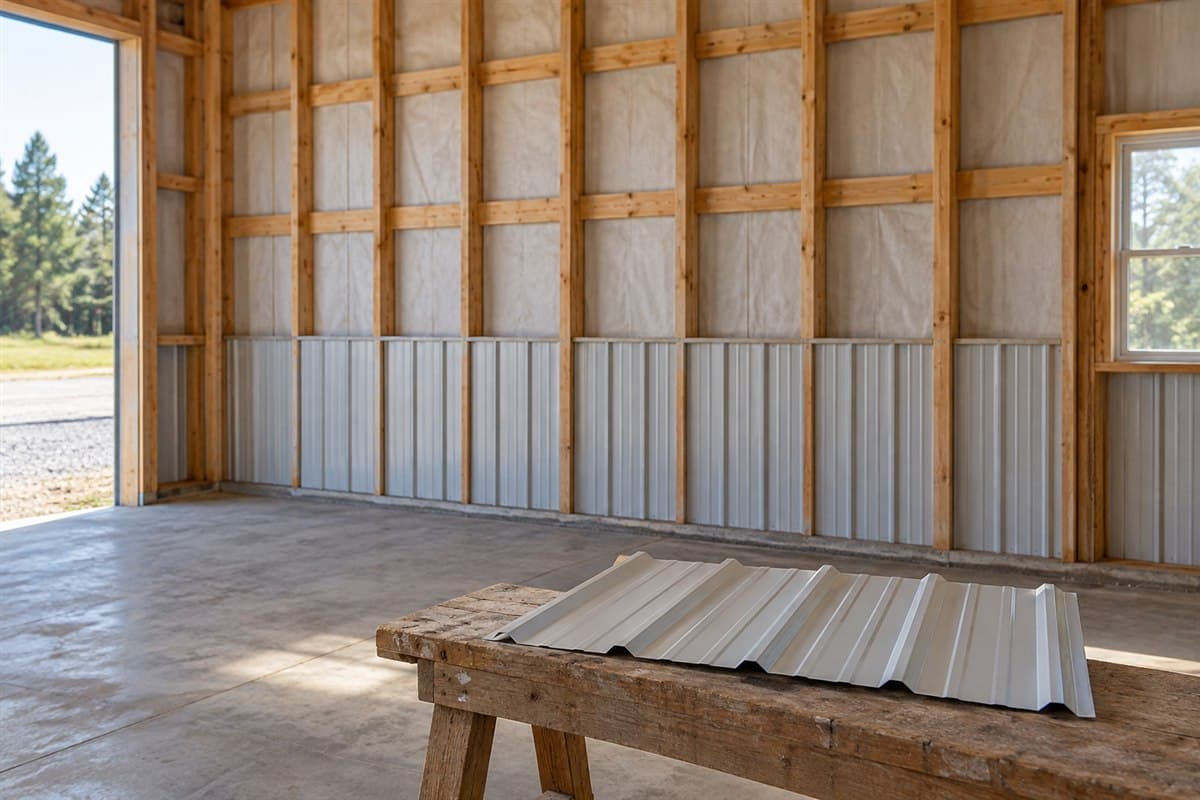
Start with the wall you want to cover, then compare the exact panel. A familiar rib shape is only part of that decision. You also need to settle the exposed edges, nearby services, and the wall layers behind it.
An interior liner panel is a panel used to finish the inside face of a building. That term describes a use. It does not tell you which sheet to order. This checklist helps you decide whether a particular panel belongs on your shop wall.
Set out a sample and a wall sketch
Gather a tape measure, pencil, phone camera, and a blank sheet of paper. Wear gloves when handling loose metal edges. Use a spare panel piece if you have one. Keep the measuring work at a bench or within safe reach.
Draw each wall as though you were looking straight at it. Show doors, windows, cabinets, outlets, pipes, and equipment covers. Name the walls by something permanent, such as entry wall or back wall. Label areas you plan to leave uncovered.
Write down whether you want the finish to cover the entire wall or stop below the ceiling. Photograph the current wall before moving anything. Include a wide view and closer views of its edges.
If an older shop has no drawings, this sketch is still useful. Look for old panel wrapping, spare sheets, or receipts to identify the existing material. Leave the product name blank if you cannot establish it.
Compare the panel in a useful order
- Identify the proposed sheet. Record its exact product name and the drawing showing its end shape. A panel's profile is that shape. Its raised ridges are called ribs. Compare the whole profile, including the long side edges.
- Find its wall instructions. Search the panel maker's website using the product name and installation guide. Look under downloads or technical information. Read the wall section, rather than using a roof detail for an indoor wall.
- Ask about the indoor use. Describe the room and what happens there. Include heating, washing, dampness, and any nearby equipment. Ask for confirmation covering the exact panel and finish. A roof-and-wall label alone does not answer every indoor-use question.
- Inspect the appearance at room distance. Stand the sample securely where it cannot fall. Look at it in the shop's normal light. Compare the face, ribs, and visible screw heads with the finish you want.
- Map every place the sheet stops. Note corners, floor edges, the top boundary, and openings. Compare the trim shapes needed at these locations before settling the panel lengths.
- Keep access in the plan. Ask the relevant trade to review areas around electrical equipment, pipes, and service covers. Keep those decisions separate from the decorative layout.
Your building's drawings or the panel maker's installation instructions decide support distances, spans, fastening patterns, and overlaps. If those requirements cannot be matched to the old wall, ask a building professional to identify the support arrangement.
Fill out the interior-use comparison table
Use one copy for each candidate. In the last column, write the answer and where you found it. Unknown is a useful answer when it identifies the next question.
| Question | What to compare | Your answer or next action |
|---|---|---|
| Which panel is this? | Exact name and full end-shape drawing | Name, drawing, or request for one |
| Does it cover this wall use? | Wall instructions and description of the room | Confirmation or unresolved use |
| What will the face look like? | Physical sample in room light | Accept, compare another finish, or wait |
| What is behind the finish? | Visible supports and existing wall layers | Photo and installer question |
| How will edges finish? | Floor, corners, top, and opening shapes | Edge list with missing shapes |
| Which covers need access? | Equipment doors, covers, and nearby obstacles | Trade review needed or completed |
| Is special performance needed? | Written requirements for this room | Exact evidence still needed |
| What remains before ordering? | Missing answers above | Named question and person to ask |
This table is a shopping aid. It is not proof that a panel will fit a wall or meet a special performance requirement.
For example, you may like a sample's appearance but lack its indoor-use information. Keep that candidate on the comparison sheet. Ask for the missing information before treating it as the final selection.
Separate the finish from the wall's other jobs
The wall behind the sheet needs its own attention. Before covering it, photograph wet spots, damaged materials, and layers you cannot identify. Tell the installer whether the room is heated or cooled.
A vapor retarder is a material that slows water vapor passing through a wall. Its placement belongs to the wall's moisture plan. Do not add or remove a plastic layer just because another shop used one. Have the wall layers reviewed for your building and climate.
Keep sound and fire questions specific too. Ask which tested construction meets the room's actual requirements. Do not treat the sheet's metal appearance as evidence for a whole wall's performance. Leave unsupported performance descriptions out of your purchase notes.
A ceiling is another use decision. Choosing a sheet for a wall does not settle a ceiling installation. Keep this order focused on the wall you have measured.
Choose the next part without guessing
The listed 26-gauge PBR panel is a candidate to examine if its exact information supports your wall use. Compare its product information with your table. Do not treat the link as confirmation of an interior finish package.
Use How to Plan Interior Metal Wall Panel Trim to build the edge list. Once the panel and edge choices are settled, use How to measure and order metal panels by length for lengths and counts.
Avoid choosing by color first, hiding an unresolved damp area, or forgetting a cover that must open later. Finish with a specific panel, a wall sketch, and a short list of unanswered questions. That gives you a clear basis for the purchase decision.